Showing posts with label Lifestyle. Show all posts

Tuesday, 4 June 2013

Nach zwei Jahren...

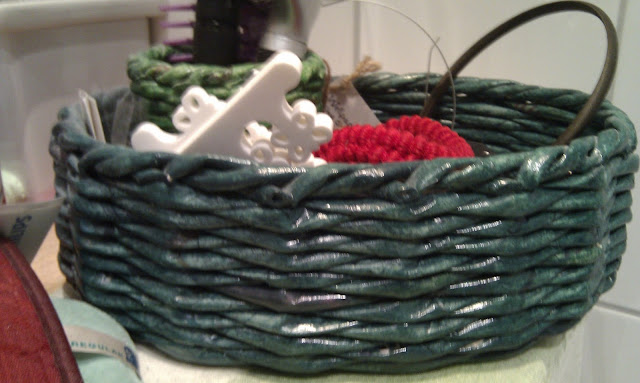
Als wir Wellpaper zum ersten Mal in April 2011 besuchten, hatten wir das "Auro" ovaler Korb gekauft. Wir wollten selbst probieren, ob die Qualität tatsächlich stimmt, wie es uns versprochen wurde. Damals haben wir den Korb in Badzimmer für unsere Kosmetik und Haarpflegeartikeln benutzt, um den Korb gegen Feuchtigkiet auch zu prüfen.

Nach zwei Jahren bleibt der Korb noch in unserem Badzimmer - glänzt so grün wie neu. Trotz höher Feuchtigkeit ist der Korb genau so stabil und fest wie vor zwei Jahren. Falls Sie jemals Zweifel an der Qualität hätten, fragen Sie uns - Sie werden die Ergebnisse selbst sehen können.


Sunday, 19 May 2013

COPPRE @ HOME

Letzten Donnerstag hatten wir einige Freunde zum Abendessen eingeladen und wir haben einen COPPRE Teelichthalter aus Kupfer benutzt... das ist der "Kalika" Teelichhalter (Klein).

Der Abend war schön mit gutem Essen, sehr guten Freunden, und in einer perfekten Ambiente. Inspiriert von dem besonders schönen Teelichthalter machte ich ein paar Amateur-Fotos mit meiner bescheidenen Handy-Kamera... in voller Dunkelheit...:-)

Wir sind in COPPRE verliebt - ♥♥♥ -  sind Sie auch?

WIR ♥ COPPRE
Die Sonne scheint von innen... :-)
Sonnenaufgang im Kupfertönen
Rotes Gold 

Wednesday, 1 May 2013

Masala Chai Rezept

Masala Chai Rezept
Zum Glück gibt es kein "richtiges" Rezept für Chai. Hier ist ein einfaches
Rezept. Am besten nimmt man Fairtrade Gewürze und Zucker und Biomilch!

* Kardamon,  1/4 TL gemalene Kadamonkerne
* Nelken, 4 Stück
* Zimt, 1/4 TL gemalen
* Ingwer, 1/2 TL frisch gehackener oder 1/4 TL Ingwerpulver
* 2 EL Schwarzer Tee
* 3 Tasses Wasser
* 2 Tassen Milch, (Kuh oder Soja)


Gewürze in Topf anrösten. Wasser in Wasserkocher aufheissen.
Tee im Teesieb legen, über Topf halten das warme Wasser langsam darüber
giessen. Milch im Topf giessen und alles warm machen. Umrühren. Nelken ausffischen.
Nach belieben Süssen.
Genieeeeeseeeeeeeen!


Unser schönen Topuntersetzer (hier in Grösse klein und Farbe Blau), hält
die Hitze von Töpfen wunderbar aus! Masala Chai kochen und gleich ausprobieren!

Sunday, 22 April 2012

Sustainable running choices

When we started with the idea of kalakosh to create a platform for sustainable life-style products, the discussion turned into how sustainable our life-styles are?

As i had been into running for about an year (My running blog), i started looking into the stuff around running to find out how sustainable it is and what changes i can do to make it more sustainable.

I started with the most important part of running, i.e. shoes. There i found a very interesting and innovative technology developed by Brooks, called BioMogo.


The ideology of brooks to share the technology to other shoe manufacturers to make the the running more sustainable is pretty cool.

To quote Brooks President and CEO Jim Weber on brooks values

“In our quest to make best-in-class performance products for runners, we also affect people and the environment as we process materials, contract with factories, and ship products around the globe. We care about healthy bodies and minds, and our role in fostering an environment where life can thrive for the long run. We are committed to evolving into a business that is more sustainable, one that builds great running gear with minimal impact on humanity and the Earth.”         

In Brooks, i found a company which is working consciously to make the running more sustainable. They also talk their principles more openly in all the forums, as a consumer it is very helpful in buying shoes.

PS : I am looking forward to buy my next brooks, Green Silence, which uses 75% recycled materials.

Monday, 31 October 2011

42.2 km, 03h:23m:34s, EUR 800

42.2 km is the distance Sandeep ran in 03h:23m:34s as part of the BMW Frankfurt Marathon yesterday. Running the marathon is in itself an achievement to be proud of. Sandeep (runner #9803) went beyond that.

He ran the marathon for a cause as part of Team Asha Frankfurt. The cause: primary education for the underprivileged children in India. Specifically, Sandeep ran to raise money for a project in Wazirpur (Delhi) to support a learning center for 80 "at-risk", out-of-school children, which will help them get back to mainstream schools. He has single-handedly raised EUR 800 as part of his one-man fund-raising campaign (Run to Educate), far exceeding his original target of EUR 500.


Photo Credits: Sanket Phadke & Meeta Paranjpe

Along the way, as Sandeep trained for the marathon, he kept passing on "pearls of wisdom" in his blog. Below are two of my favorites:

"Pain is inevitable. Suffering is optional" (quoting Haruki Murakami here)
"Fear is an illusion" (as quoted here)

It's a perfect example of choosing to make a positive impact. We are proud of your achievement, Sandeep!.

Keep running!

Saturday, 29 October 2011

Arvind Gupta: Turning Trash Into Toys For Learning

I watched this video a few months ago more in context of learning aids for primary education. Today I remembered it and I look at it through the prism of sustainability and re-usability. Arvind Gupta, the presenter, offers these simple "handmade" toys using readily available items like safety pins and match-sticks as learning aids for children in rural areas. These not only help in understanding basic science concepts, but also are fun, creative, and imaginative. Check out the doodling box for blind children - that's my pick.


Watching this video, I am also asking myself whether this is only about low cost learning aids for kids in rural areas. Wouldn't you take some of these ideas for doing some fun projects with kids around you...bringing art and science together? And a lesson in sustainability too, when the kids see that these toys can be made by re-using potential trash items like paper clips or old newspapers.

Tuesday, 18 October 2011

Importance of Choice

Came across this interview with Prof. Peter Singer in the German Retail Blog (of Lebensmittel Zeitung), which I wanted to share with you. Reading it, I felt it was quite a provocative interview - the interviewer trying to challenge Prof. Singer's views on ethics and Prof. Singer, in turn, challenging the audience to think differently. 

Reason for highlighting this interview here: there are a couple of thoughts in there I'd like to reproduce here, which also relates to what Kalakosh stands for.
"At the end of the day, you have a choice and can vote with your pocket. That determines what is going to be produced. Producers will only provide such food, if you keep buying it."
Lifestyle is about daily choices we make - some big, some small; some easy, some not so easy. As consumers, we are spoilt for choices - though I feel that we too often forget to exercise those choices consciously or conscientiously. Now, as I learn more and more, I realize what I have missed. 

Which brings me to the second thought from the interview:
"I very much doubt whether you will ever be that [a saint], but the important thing is not to say, “Well, I can’t be a saint, so I shall just throw up my hands in despair and won’t bother trying.” Instead, you should say to yourself: “Look, I can improve!” 
As consumers, despite the choices we have, it is easy to succumb to our favourite brands or to peer pressure or to the price tag - I am probably the best example of that. But I am learning that we can all make a difference - through any action, big or small. One doesn't need to be a saint.

So, after a bit of a philosophical post, I leave you with your thoughts ... remember, every decision you make counts!

post-script: if you are considering giving up meat as I am at this point, you might also wish to refer to our earlier post on the relative cost of consuming various food products in terms of carbon emissions.

Tuesday, 11 October 2011

school musing: part II

as promised, an extended review on the recycled and handmade paper journals, viz. notebooks and writing pads.

the cover of these very unique journals is made from pages of old school-notebooks, while the pages inside  are made with regular white handmade paper. the process that gives these a distinct look is the use of tea to give the covers their earthy brown tone. read: totally organic and sustainable and beautiful.


a word on the dimensions - the size of a big sketch book is around 8.5 in. x 11 in.  the small size book and journal come in the size 6 in. x 8 in. each. All of them include 48 handmade paper pages respectively.

the book fits the purpose of a savvy yet conscious business professional as well as a university student striving to make a difference. for one and all!

coming soon!

Thursday, 29 September 2011

Recycled Paper Basket

We've been going through the products samples we have received in the last few days. We are all super excited to see the products first-hand and can't wait to get them to you. That's why we'll be putting out some of the pictures for you to see and get a feel for what kind of products and experiences we're preparing for you.


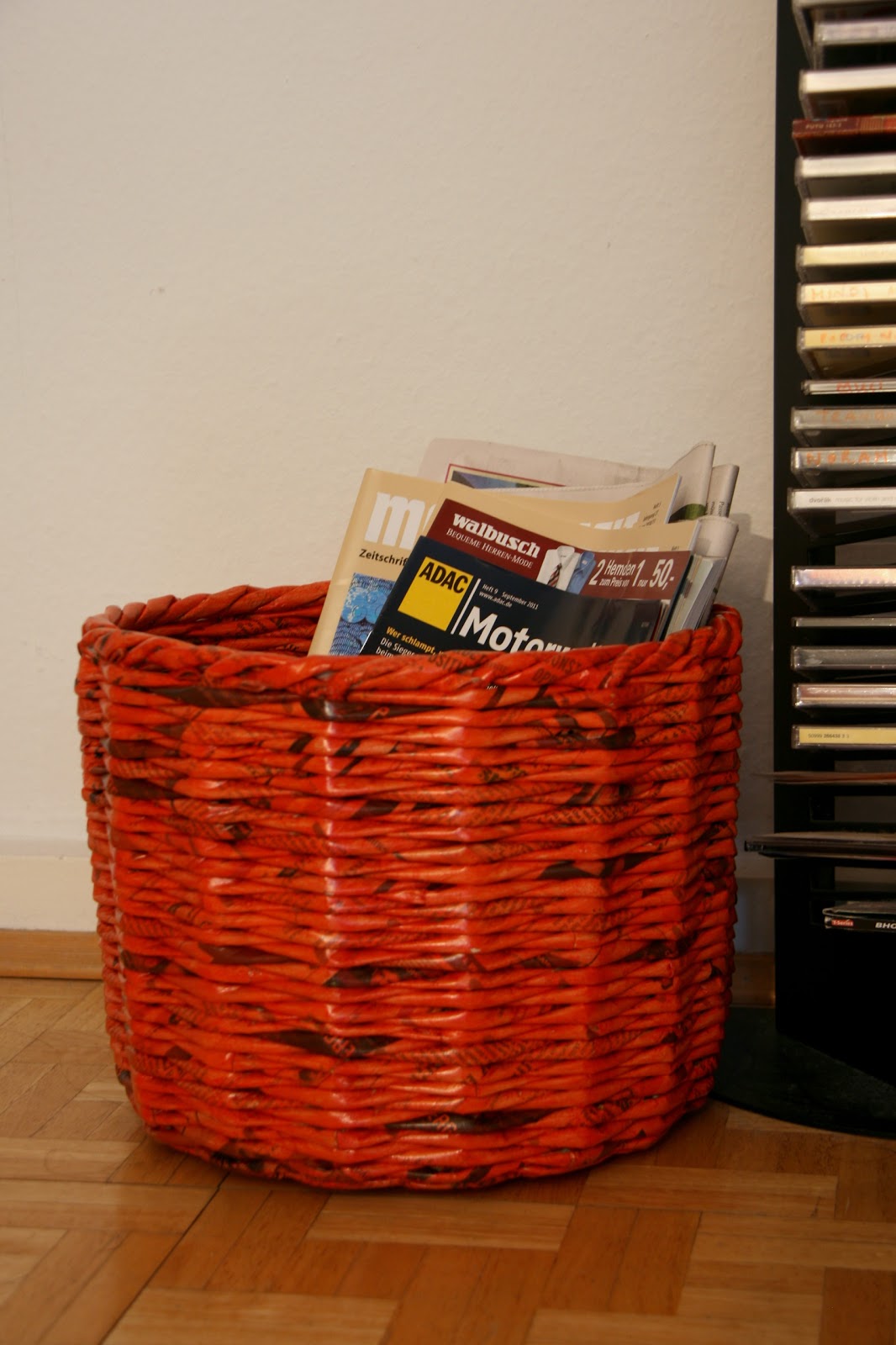
One of our favourite ones are the recycled paper baskets. Made from old newspapers, the paper is rolled in and then "woven" to create these baskets. In terms of look and feel, they look similar to the cane baskets...just a bit more cooler... :-) The basket will be available in three sizes - small, medium, and large (the one above is the large size).

The basket will be available in colours including red, orange, and blue. There is also a natural (uncoloured as the newspaper itself) version available.The colours used for the basket are essentially non-toxic inks (similar to those used in childrens' comics). 

The great thing is that these sturdy baskets are very much multi-purpose - for example, as waste paper bins, or as magazine/newspaper holders (as shown in the picture), or to hold all your craft material - pretty much anything and everything, which is not wet.

What do you think? Let us know...and stay tuned for more product previews.

Sunday, 28 August 2011

Carry Bags - Paper vs. Plastic

As a layman in the world of sustainable lifestyles, I instantly associate plastic with "not good" and paper with "good". If either is recycled, then "very good". The reason for this distinction is the conventional wisdom that plastic is not degradable ... or, to be more correct, takes forever to degrade.

So, I am actually intrigued, when I read about an Indian company called Biotec Bags in this article. Actually, I am not intrigued by the company - it is using "bio-degradable plastic" technology to make bags. The curious part is the comparison between paper and plastic bags on their website. The conclusion, quoted here from their website:
"Except the degradable period all other points are favoring Plastic bags than Paper bags. Since Bio degradable Plastic bags' degradable period is approximately 6 months only, Biodegradable Plastic is better in all aspects than paper and normal plastic bags." (Source: http://www.biotecbags.com/plasticmenace.php)
As I understand - normal plastic bags are better than paper bags, except for the degradability period. With bio-degradable plastics, even this disadvantage is nullified - suggesting that bio-degradable plastics should be the eco-friendly material of choice for, at least, carry bags.

Sadly, there are no references in this comparison to any research or study, which might have lent more credibility to that conclusion and driven some fact-based decision-making for consumers. And there is no information which can help gauge, how widespread is the use of bio-degradable plastics across the world, what are their applications (apart from carry bags), and so on. One reads about plastic bags being restricted or banned in many places - in more than 25% of the world, according to this entry in Wikipedia. (individual examples: here, here, here, or here). But is that a better solution in light of this information (assuming it is factually correct)? What about recycled plastic bags (as shown below)?


For me, I'd like to think that recycling to be the lesser of the evils - irrespective of whether it is paper or plastic. Maybe I'll be proven wrong someday with some new scientific study out there. Till then, I'll follow recycling in good faith.

The real lesson from this is: just carry your cloth bags or totes with you whenever and wherever you go shopping. Forget plastic or paper.

Please share any more information you may have on this topic - your thoughts on the same are most welcome.

Monday, 22 August 2011

A Case for Being A Herbivore

The first 20 years of my life, I was a hardcore vegeterian. Except for that one little incident in school when I decided to taste some boiled egg from Shailesh W's "dabba" (lunch box) - and, yes, where I come from, eggs are considered non-vegeterian. I incurred the envy of my sister and the wrath of my mum - two tight ones across the cheeks (after the first, I did not even need to offer the other cheek, as Gandhi proposed) and a house arrest later, I was wiser. Eggs, chicken, mutton ... all of it was off-limits.

At college, I rebelled (or experimented, depending on how you look at it). And it continues till this day. I am not a vegetarian anymore. But lately, I have been thinking about the arguments about how being vegeterian or vegan is environment-friendlier, and, possibly, healthier. You probably must have read about this somewhere...or heard about it from friends...or simply knew it intuitively (I don't think my mum or sister knew it that time either... but that's another story all together!)

Yesterday, I saw this graph on a blog post from Sustainable Dave. Originally based on an article from Scientific American, I think its probably one of the first pieces I have seen that actually quantifies the environmental price we pay for some our our diet choices... I thought this was quite creative.


Courtesy: Scientific American

Jokes apart, this does appeal to me to reduce my meat intake ... or rather, I think, it makes a good case for adopting a balanced diet. And isn't that what doctors have been telling us since like ... forever?

Your thoughts?

Thursday, 9 June 2011

What's the Mission - Fair Trade or Lifestyle?

As we worked on the concept, we often asked ourselves whether we'd like to be a fair trade store selling lifestyle products or whether we'd like to be a lifestyle store promoting fair trade. For some, the difference is not big between the two.

But there is, when you think about why anyone should be interested in buying our products. We want to offer irresistible and quality products to our customers and they will buy it - not because they are fairly traded, but simply because they are irresistible and quality products.

The way I am looking at this - it is almost a cycle. Use of terms like 'conscious consumption' suggest that the onus is on the consumer to make a 'conscious' decision while buying a product. But that approach excludes a significant majority of the population from fair and sustainable trade. This results in lower volumes, higher prices, and, in turn, lower consumption.

In a discussion with the owner of an organic food processing business in India, one of my questions on how an average Indian family of 4 can afford and benefit from organic food remained unanswered - suggestions around lower medical costs and conscious buying decisions were vague. All this in a time of high and volatile food prices. This is not to say that organic food is the wrong thing - it just means that any food product with its organic origins as its only USP is bound to remain outside the mainstream. That neither helps the cause nor the business.

Fair trade, ethics, sustainability - these are not meant to be privileges, but responsibilities. These should be inherent in what we do. It should not be a contrived effort, because that will result in cynical consumers - and cynicism is high out there, when it comes to these principles. The onus will always be on the manufacturers and retailers, not on the consumers, because they will go for what's the best for them.

Sometime back there was an excellent article on Subaru in Businessweek - it manages to invest resources in its recycling efforts only because its cars sell. For all the companies marketing their green credentials, most people buy their cars based on many other factors aside from the green technology. For a great car, it adds to the good feeling that it is green too - but for a bad car, nobody would care if its green or not.

So, there we are: we will be a lifestyle store promoting sustainability and fair trade. You'll find out soon about the irresistible products we are talking about in the next posts. Stay tuned!